Insights

Podcast: What To Do When Your Product Is Too Complex for Slides

Most B2B companies are still trying to explain highly complex solutions with slide decks, brochures, and PDFs.  The response from buyers (and everyone else) is always the same: “I can’t see it.”“I just can’t picture what you mean.” It’s because whatever these companies are trying to explain is bigger, deeper, and more detailed than the medium they are using to convey it.  Imagine if there was a new tool. An interactive world your buyers could explore to see the full picture and value of what you do.  That’s what I explore in this episode of the Make It Matter podcast.  I sat down with Sean Bruce, partner at Cadpeople—a Scotland-based visual communication studio that has spent three decades turning complex ideas into engaging visual worlds. What exactly is this visual world thing? The concept: A visual, explorable digital environment that shows your entire solution—exactly as it works in the real world. Think of it as a comprehensive visual explanation. The goal: Take something that’s normally hard to picture and turn it into something people can finally see and understand.  At Everhouse, we call it a Storyworld. Cadpeople calls it a Digital Universe. Cadpeople, by the way, is the primary development partner for our Storyworld platform. In the podcast, Sean shows a Digital Universe that Cadpeople created for Siemens. Check it out and you can see the very thing I am explaining.  The roots of this approach for Cadpeople go back to their early history in architectural visualization.  Before they ever touched B2B marketing, they were designing lifelike environments—spaces with flow, scale, light, realism, and movement.  When they began working with advanced technology companies, they realized something powerful: the same architectural principles used to help people understand a building could help people understand a business. A Storyworld is not a video, not a slide deck, and not a brochure. It is a digital place where your products live in their real-world context, and where buyers and employees can see how everything connects.  If you’ve ever thought, “I wish people could just see what we do,” this conversation is about what happens when they can. 

Read More

Free Tool: Creative Concepting Card Deck

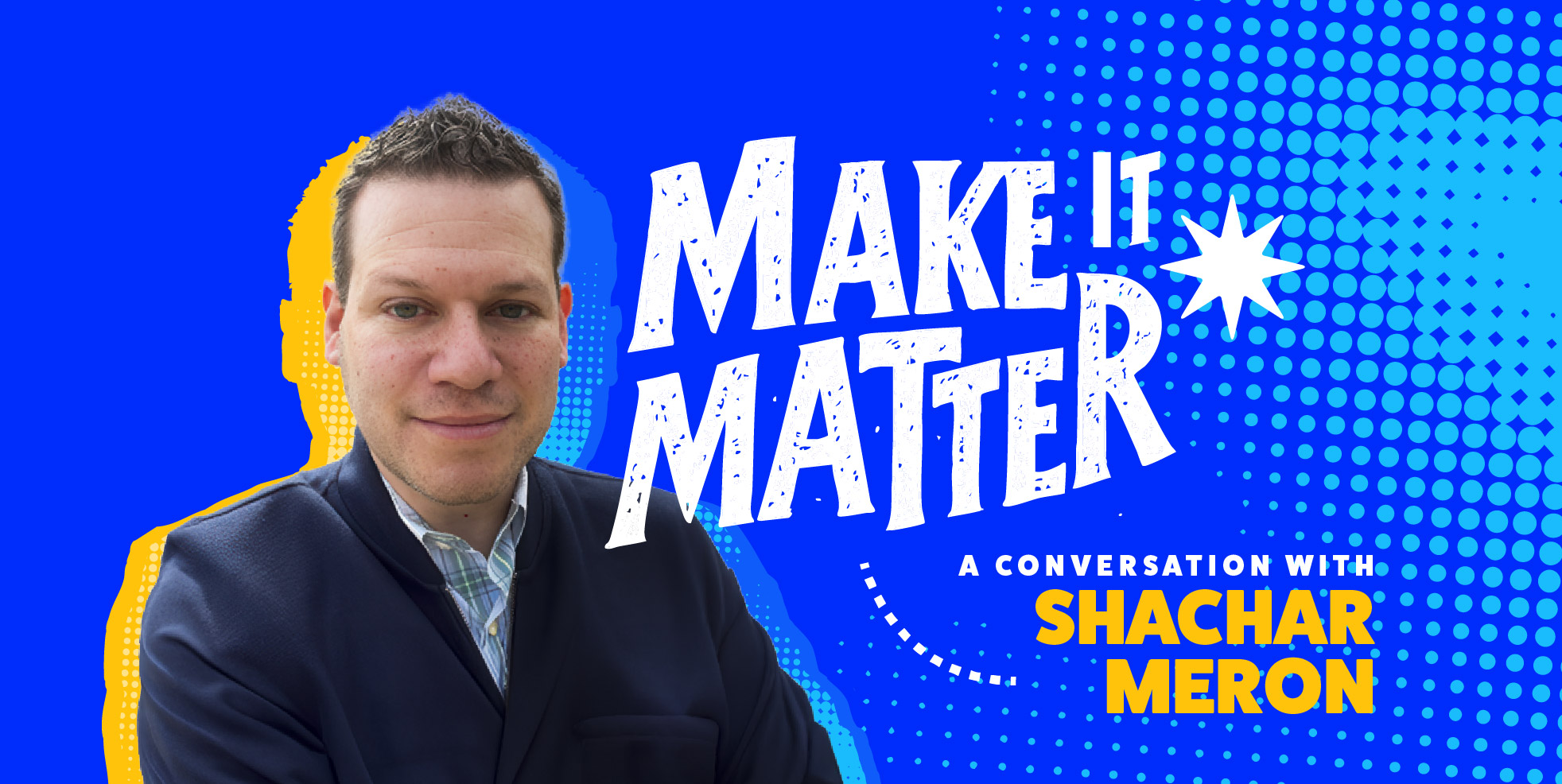
Bring the Good Stuff I’ve been writing a lot about concepting—because it sits at the very heart of the creative process. Too often, teams short-change this step or skip it altogether, moving straight from information to production. But in between is where the magic happens. Without proper concepting, production output is often just a dressed-up version of the raw material. This is especially true when it comes to product marketing. You’re constantly pushing products to market—each a hair better than what it replaces, each entering a marketplace of lookalike options. You lean on buzzwords (flexible), evergreen benefits (automated), small victories (optimized), or puffed-up superlatives (revolutionary). You wonder what’s the hook. Is it a key feature? Or is strong creative? The truth is, it’s both. And they meet in concepting. Introducing the Concepting Prompt Deck Today I want to put something practical in your hands — two sets of concept ideation cards, a simple set of instructions, and a process you can start using today. The deck features: How the Deck Works When you put these cards in play, you begin asking sharper, more imaginative questions: Putting Concepting into Practice There’s both an art and a science to concepting. That’s why the deck also includes guidance on: It’s designed for flexibility: you can use it in workshop mode to fuel group ideation, or as a daily game to keep your own creative edge sharp. Learn from a Concepting Expert For more on how concepting works in practice, check out this episode of the Make It Matter podcast. I spoke with concepting expert Shachar Meron, who breaks down how to get into the right creative state, push past the first obvious answer, and shape a direction that will connect with buyers.

Read More

Podcast: How to Craft a Standout Creative Idea  

Grabbing attention in today’s market is harder than ever. Everyone’s talking, hyping, overpromising. So how do you create the one idea in 10,000 that actually lands? It’s the question every creative team faces. And when they crack it—when it clicks—it’s magic. Take Nike’s Just Do It. Apple’s Think Different. Old Spice’s The Man Your Man Could Smell Like. Hall-of-fame concepts. All born from one clear, powerful idea. So, How Do You Get There?  That’s theme of this episode of the Make it Matter podcast.  John Severance talks with Shachar Meron, partner at Bluegreen Branding and senior lecturer in advertising and brand strategy at the University of Illinois, about what it takes to develop a creative concept that cuts through. Drawing on years of agency experience, Schachar walks us through the process—from writing a tight brief to finding that one clear, powerful insight that unlocks everything else. It’s a behind-the-scenes look at how standout ideas move from strategy to impact.

Read More

The Science of Fascination

There are two ways to win someone’s attention: Be brief. Or be captivating. Brevity cuts through noise. It tunes out what’s unnecessary and confusing. Fascination does the opposite—it tunes in. It draws people closer to what feels vivid, interesting, and personally relevant. To connect with an audience today, you need both. Brevity Matters B2B communication has a bad habit of being long-winded: bloated sales decks, 40-page PDFs, jargon-packed websites, brilliant solutions buried under a pile of bullet points. Yes, it takes time to explain complex ideas. But if you can’t do that quickly, people disengage. Fascination Matters More Most B2B brands have figured out how to explain what they do more clearly. Fewer are asking how to make someone care. You can be clear as day—and still boring as hell. You’ve heard of “TL;DR” (too long, didn’t read). But in most business settings, the real killer is “TB;DC”—too boring, don’t care. Brevity gets the message across. But fascination gives the message weight. It creates a moment that actually lands. This is especially true in high-stakes B2B. Where the buyer’s status quo feels safe. Where switching solutions introduces risk. Where understanding isn’t enough—you need conviction. Fascination in Action: The Twilight Phone Let me give you a quick example. A few years back, we helped our client Somos tell the story of their pivot into the trust marketplace. They were launching a solution set to combat telephone number fraud—essentially building a trust layer into the mobile network. Their instinct was to showcase the tech. Dive under the hood. Highlight the algorithms. We took a different approach. Instead of walking the audience through a diagram, we walked them into a story. We created an original film series called The Twilight Phone—a five-episode homage to the Twilight Zone, shot in film noir style. There was a woman in distress. A mysterious figure who holds the answer. And a descent into digital deception. The audience wasn’t just shown the product. They were invited into the problem. We dramatized the stakes. We knew that during a day-long virtual customer summit, we’d lose people if we didn’t give them a reason to stay. These videos did exactly that. Break after break, customers stayed glued to their screens. They had to see what happened next. Yes, we were brief. Every episode was to the point. But what made it work was fascination. We gave people a story they wanted to follow—and inside that story, we placed the strategic message. Watch The Twilight Phone series here. What the Science Says There’s a reason this works—and it’s about how the brain processes information. Clarity Comes First: The brain craves information that is easy to process—what psychologists call cognitive fluency. If something feels too complex or abstract, it triggers cognitive strain, and people check out. Fascination Drives Decisions: The amygdala—the brain’s emotional command center—plays a major role in decision-making. Even in B2B. Especially in B2B. Buyers aren’t just evaluating information. They’re weighing risk, uncertainty, legacy systems, and political capital. What they need isn’t another fact sheet. They need belief. Reassurance. A reason to move. The amygdala decides whether to stick with the status quo (the buyer’s typical stance) or lean into adventure (the seller’s proposition). Fascination activates that decision point. It makes your message feel significant—and worth the leap. Story Is the Delivery System – Fascination is often channeled through story—because story is what creates emotional immersion. It simulates real experience in the brain. Story builds tension and resolution. And it puts information in context—where it can actually influence behavior. As Harris III puts it, story is the “operating system of the human mind.” That’s not metaphor. That’s biology. Brevity + Fascination = Action In a world flooded with noise, the winners are not the ones who say the most, or even the those who say the least. The winners are the ones who say what matters—clearly, creatively, and in a way that people get up from their office chairs and act.

Read More

Leading with Narrative: Crafting Your Company’s Future Through the Power of Story

For a business leader looking to make an impact on the market in 2025 and beyond, a compelling vision is a must…but it’s not nearly enough. To truly unite a company behind that vision—to make it sing in tune for a large and disparate group of people—a leader must first be a great storyteller. This means more than being sharp with an anecdote or good on the microphone at the next company gathering. It means having the ability to recognize the narrative threads that situate a company within a broader narrative of industry and time, and then to use that vision to write a new and better story—one that guides individuals and markets alike.  So how can you develop this sort of true storytelling ability, and put it to work for your company in 2025? Narrative Intelligence Recently, Everhouse’s own John Severance was able to sit down with Harris III, master illusionist and curator of the Annual STORY Conference, wherein brand leaders and creatives from across industries gather to explore the importance of story to the human world and heart (you check out their full conversation here). According to Harris, story and narrative themselves make up the actual “operating system of the human mind,” the inescapable framework through which we view every aspect of the world around us—and within us. Our thoughts, our motivations, the approach we take to our lives and work—all of these are influenced, consciously or not, by the stories we’re told by ourselves and others. They are, quite literally, how we understand meaning itself. “Every problem we face starts as a story problem,” Harris explained. “Which means every solution to every problem we face begins with a new story.” Ready to Think Like a Storyteller, Not Just a Strategist? Tune into our Make it Matter Podcast to learn how the power of story can transform the way you lead and connect. This isn’t some sort of touchy-feely sentiment; it’s nuts-and-bolts psychology. Throughout history, all the truly great business leaders have recognized this, and shared a keen sense of Narrative Intelligence—the wisdom to see beyond the surface level facts, figures, and raw data that so often get posited as the most important information in a given industry, and to sense the real and powerful current of narrative that flows constantly beneath, influencing everything and everyone above—including themselves. Narrative Intelligence is much more than just some romanticized, Walter Mitty-esque tendency to see yourself as the star of your own private, epic saga. On the contrary, it’s simply a recognition of a defining human reality—that story itself is always at work, all around us. It’s a sort of story-centric “second sight”—and if you, as a leader, want to do more than simply preside over things as the current sweeps you along through the future business landscape, it’s a sight you need to develop. Narrative Agency But understanding the story around you is only half the battle. The second (and just as important) step comes with actually doing something about it. Like Narrative Intelligence, Narrative Agency is a key trait that the truly great business leaders have possessed in spades, and it all begins with courage—the courage to recognize the flaws, gaps, and opportunities inherent in the story currently being told, then seizing on them to tell a new one. Take Phil Knight, and his “everyone is an athlete” story that compelled the average Joe to get just as interested in a pair of fresh running kicks as the elite athletes he watched on TV. More than working as a simple marketing slogan, it carved out an entirely new market segment which his company was perfectly ready and situated to serve. He told the world a new story about the possibilities of physical fitness for the average person, and changed sportswear history in the process. Stories, when properly and courageously told by those who understand and believe in them wholeheartedly, do more than influence people—they craft and narrate the future, moving entire markets in the process. That said, not just any halfhearted and hollow attempt at “once upon a time” is going to work. People, by and large, are remarkably discerning—always looking for something compelling and true to throw their efforts behind. Lead with pretty-sounding catchphrases and vague platitudes, and they’ll land on justifiably deaf ears. But invite people into a narrative driven by creative thinking and imagination—one that points your values, services, and goals in a clear direction toward a worthwhile destination—and you’ll see engagement like never before. Less Analysis, More Authorship That said, your job isn’t done when the big talk is given, or when the new company narrative documents are finalized. On the contrary: once the truly compelling story of your brand is written, you become the keeper of that story—there to recognize when new developments, communications and products diverge from the narrative, and there to bring them back into line. “The story that the leader tells is what people key off of,” Harris explained. “But it’s got to align with everything else—the culture, the behaviors, the environment.” Your story can’t be something that gets polished up and tucked away in a file somewhere to be forgotten. It has to be a living, breathing ethos, one that impacts and transforms at every level. With time, consistency, and belief in the story you’re telling, you’ll find yourself gaining new investment and deeper understanding from those around you—you’ll become a unified force, operating in a common how toward a common why. Ultimately, this stage is the end goal of any great executive storyteller—to create storytellers at every level of the company, capable of going out into the world to make connections for your brand. Harris III explained it this way: “Story’s greatest power is not in its ability to convert, it’s in its ability to connect.”


Read More

Does Your Thought Leadership Lead to Sales?

Most marketers know that one of the best ways to attract opportunity is to regularly share expertise through thought leadership. But as you’re creating content and sending your insights into the marketplace, it can be tough to know whether they are making an impact for your business. That’s why it’s important to never lose sight of thought leadership’s true end goal: generating sales. And the best way to cash in is to create a thought leadership roadmap that’s parallel to your customers’ purchase journey. Focusing Thought Leadership Strategy Where It Counts: The Customer Journey Thought leadership more than a set of whitepapers. It’s an elevated strategy where you answer your customers’ most pressing questions in a consistent way, and at a deep level of practical expertise, to become an authority. For thought leadership to drives sales effectively, it cannot be simply random acts of content. Instead, thought leadership must guide the customer journey. It then becomes a powerful way to meet customer and prospects at their most impactful inflection points and provide them with the most relevant answers – step by step, decision by decision. Thought leadership that successfully sets the scene, establishes the stakes and guides customers toward a decision has been shown to yield more and faster sales, as well as larger deals. Plot Your Progression Following a clear plot progression is vitally important in achieving your end goal of increased sales. To help you develop a journey framework, we’ve separated into categories below the different purposes a thought leadership piece might achieve. Just like any good sales approach, thought leadership must create a vision of better future, contrast that with the present state – and map the journey in between. These categories aren’t necessarily siloed, of course, and one initiative might aim to achieve any or all of these purposes. Picture of the Future People are thirsty for innovation: the next big thing, the newest upgrade, the upcoming disruptor. At its most strategic level, thought leadership (and sales) is about being visionary. So give them what they want. Create a future end point for your customers — a clear vision of a tangible payoff that will make their lives better. This future shouldn’t be too distant or esoteric; we want it to address consumers’ current and near-future pains and opportunities. And it should provide a compelling answer to the question of why: Why should customers want to reach this future? Why is it worth changing current habits? Map the Journey from Now to Next Another goal of thought leadership (and sales again) is to show your audience the chasm that exists between today’s experiences and tomorrow’s potential. Chart the process for moving from present to future, drawing on your deep expertise to act as the trusted mentor who can provide structured guidance and help steer clear of pitfalls. Roadmap and strategy recommendations show your consumers that you recognize and understand the difficulties they may encounter along the way. And by showing them what it takes to get from present reality to envisioned future, you’re earning their respect and their interest in your solutions. Force a Decision Breaking the spell of inertia and forcing a decision can be a sales executive’s and marketer’s biggest challenge — especially when dealing with customers’ often byzantine decision-making apparatuses. So make the matter urgent by identifying the factors that may be delaying action and addressing them head-on. As you’re working to force a decision, metrics can be your best friend: an ROI report, a revenue projection, a cost-benefit analysis. These data points can help convince even the most reticent of decision-makers to sit up and take notice. And when viewed as a whole, with the potential upcoming difficulties you’ve projected, the future you’ve drawn and the road map you’ve charted, your thought leadership should spur your audience to action. When you unite thought leadership to a purchase journey strategy, you establish your company as a trustworthy leader, and sales prospects will be more inclined to use your strategic thinking to guide their decision-making process. Looking Inward for Thought Leaders Once you’ve mapped out your thought leadership framework, your task is to produce the distinct insights and develop compelling content. Luckily, your most valuable research and discovery resources are already under your company’s own (metaphorical) roof. A vital part of successful thought leadership is the ability to draw forth and illuminate the knowledge and expertise that your business taps into every day — that of your internal team members. These individuals have already embarked on and completed your customers’ journey, simply by dint of having created your solutions. Up and down your product development chain, your teams performed the painstaking work of: Along the way, there were countless hours of intense arguments, several confusion-clearing meetings and who-knows-how-many “Have you considered …” emails. There were detailed discussions about a solution’s logic and positioning, its payoff to consumers and its path (and potential barriers) to success. Because these are your genuine, original thought leaders, and they’re the most valuable source of research and knowledge that you could possibly ask for. This internal journey created knowledge and experience that would be impossible to replicate, and it can and should be tapped as you recreate the journey for your external consumers. Retracing your solution’s steps through the organization is both rigorous and rewarding. You’ll need to get technical with your inventors and delve into the weeds with your engineers. From this deep work, though, will spring forth a truly effective, and truly sales-enabling, thought leadership strategy and message. Establishing Expertise, Creating Opportunity By focusing on your customers’ growth journey, you ensure that you’re making yourself visible to consumers at the moments when they most need your expertise. By tapping into your teams’ deep experiential knowledge, you’ll create a foundation of true proficiency, and you’ll be able to position your thought leadership as the external authority to which consumers and potential partners look when they need guidance they can trust. And by following this process, you will set up your…

Read More

Here’s a Better Strategy to Share Your Big Idea

How to Avoid Ending Up in the “Did Not Finish” Pile It’s not unusual to assume that something is easy to understand simply because it’s a good idea. Sadly, that’s not the case, and there are plenty of examples to illustrate the point. A famous one is Kodak and the advent of the digital camera. Everyone has heard the story. Steve Sasson, a Kodak engineer, actually invented the first digital camera back in 1975, long before anyone else was seriously looking at the technology. According to Sasson, when he presented his idea, Kodak leadership called it “cute” then killed it because it was filmless photography. It didn’t fit the existing model. It was too disruptive. As most mentions of the story have it, the leaders of Kodak failed to innovate. They missed the big idea, and it cost them their company. But was the fault entirely theirs? If Sasson found a better way to communicate and help them understand the opportunity, could there have been a different outcome? Communicating Isn’t Always (or Ever) Easy While your idea might seem crystal clear in your own mind, there’s a good chance that other people may not see it that way. Ideas with underdeveloped or overdeveloped value propositions and core messages are at risk of being poorly communicated and subject to dilution, misunderstanding, or contextual inaccuracies before they even get a chance to make the leap from development to adoption. The result: According to Fahrenheit 212’s Mark Payne, almost 90% of ideas for groundbreaking new products or services turn into marketplace flops or never see the light of day. One of the greatest difficulties inventors, developers, and innovators face is establishing and preserving the full value and integrity of their idea as it’s communicated across internal and external value chains. And when you consider the diversity of audiences that an idea must pass through—with their varied backgrounds, pain points, and priorities—an almost 90% failure rate isn’t that surprising. The role of strategic communication in advancing any idea is as critical as your technology roadmap or development process (in fact, it should inform them). You only have one opportunity to make a first impression, so to help you along the way, we’ve put together seven key considerations to keep in mind. 1. Clearly Define Your Idea’s Unique Value Proposition A clear understanding of your idea and the value it offers is essential, so it’s important to accurately articulate your idea. If you focus on the core elements and points of differentiation that make up its value, inspire meaning, and generate the most impact, you’ll establish the foundation you need to build on across every audience you’ll meet along your journey. A well-defined idea should be understood no matter your audience’s education level, department, or seniority. If other engineers, inventors, or designers are the only people who grasp the gravitas of your idea, you haven’t found the proper way to explain it yet. In addition to the technical details that make your idea exciting in your mind, you must look beyond and find the core values and benefits that will connect on a more common level. Clearly defining your idea is especially important in collaborative environments, when there are several disciplines and outside partners with different vocabularies, needs, and priorities all working together to breathe life into the finished product, service, or platform. 2. Establish the Potential for Strategic Impact With a strong foundation in place, it’s time to expand your thinking. Where does your idea fit within your organizational strategy? What is the potential for impact? Does your idea skew more toward a sustaining innovation? Or does it have potential as a breakthrough or disruptive opportunity? For many stakeholders, the impact may be more important than the actual idea itself. A simple way to look at potential for impact is by thinking about a series of widening circles. At the center, how will your idea first impact your organization? As you widen the aperture, how will your idea then impact your customers and partners? Your industry? Adjacent industries? Society at large? The planet and beyond? By establishing how your idea strategically fits into a larger schema and impacts an existing or future roadmap, you exponentially increase the odds that your idea will connect with stakeholders and find greater support on its journey. 3. Understand Your Key Audiences Once you have the basic story and potential for impact defined, it’s time to firm up the list of people you’ll need to present your idea to along the journey toward adoption. Different internal and external stakeholders will be looking for different information presented in terms they understand, so you want to make certain that you understand their needs and pain points and that you speak their language well enough to establish trust and convince them to support your efforts. You can start by establishing baseline personas. Who are the key stakeholders you need to talk to in order to move your idea forward? How do you prioritize them? Who is most likely to champion your cause? What are their specific needs? What is their level of understanding, and how do they prefer to communicate? These are just a few of the questions you want to answer. 4. Beware the Curse of Knowledge You may be familiar with this term if you’ve read Made to Stick: Why Some Ideas Survive and Others Die by Chip and Dan Heath. The Curse of Knowledge is a cognitive bias that causes a subject matter expert to fail to account for the fact that others don’t know the same things that he or she does. In other words, you may know a good deal more than others on a given subject, which may cause you to unconsciously assume that people will have some level of understanding on the subject too—even when they don’t. In general, this bias is most commonly associated with education, which is essential when introducing your idea. Often, the expert sees his or her audience’s lack of understanding as…

Read More

How to Add Life to a Narrative That’s Flat, Dull, or Meh

Have you ever spent hours agonizing over messaging — the word choice, the flow, the details — only to have your story come out sounding flat? If your messaging feels stale, overworked, or just plain “meh,” chances are you’ve boxed in your story. This is what we call it when you become locked (often, unknowingly) into a certain channel of thinking and just can’t get out. It’s like wearing messaging blinders: When your vision is limited, it can be tough to tell stories happening outside your line of sight. As a result, you prevent your story from truly flourishing. Boxing in your story can — and probably will — happen to even the most experienced communicators, marketing teams, and copywriters. It’s a common problem that can be easily fixed by reframing your thinking and asking tough questions. Let’s walk through the three most common ways people box in their own stories to discover how you can make sure your story flourishes. Have I Boxed In My Story? Before we discuss how to unbox your story, let’s talk about what a “boxed in” story even looks, sounds, and feels like. Here are a few symptoms of a narrative that has been boxed in: On the other end of the spectrum, stories that are truly allowed to thrive are engaging, clear, and compelling to both internal and external audiences. Good stories are also sticky, or memorable. It’s important to note that a boxed-in story isn’t a reflection of the quality of an idea, product, or service. Even the most innovative, novel ideas can be boxed in by misguided messaging, and even the most “boring” products can be brought to life through the right narrative. So how do people box in their stories? Here’s what we see most often: Obsessed with the “How” But Forgetting the “Why” One of the most common ways people box in their story is by putting too much emphasis on the “how” of the story instead of the “why.” This problem is especially prevalent when it comes to messaging for products or services. In these cases, the message gets lost in the details about how exactly an idea works and how customers will use it. These stories are often filled with technical language and industry jargon. This is a classic case of putting the cart before the horse. Before your audience learns how to use your product, they need to know why they should use your product, or why your solution is better than what they already have. You can save the details of “how” for collateral down the funnel or — even better — for a sales meeting. Ignores the Customer Point of View The second way we see people box in their stories is similar to the first, as both are the result of stepping only halfway into your customer’s shoes. Often, messaging doesn’t resonate because it focuses too much on your own company rather than specific customer pain points. We see this in both brand-level and product messaging. It’s easy to get wrapped up in your company mission and how your products and services will revolutionize your customers’ lives. However, this “me me me” messaging fails to bridge the gap for customers between their problems and your product. Half-Baked Creating a strong message that resonates with customers is a lot of work. It can take hours of research, several drafts, competitive audits, soul searching, and more. As a result, we often find that stale mission and vision stories are the result of half-baked messaging. In other words, all the grunt work needed to craft a finely tuned message — the personas, value proposition, differentiators — have not been fully thought through. Really, we find that half-baked messaging is the root of most narrative and story conundrums — when you don’t have a strong foundation, it’s easier to focus on the “how” or on your company itself. Going All-In with Your Story To create a truly engaging, sticky story, you need to go all-in with your messaging. That means digging into the core of your idea, product, or service; building a thoughtful narrative around your buyer’s vision (or your customers unconsidered needs); and bringing that story to life. At Everhouse, we package all this work into a process we call “Finding the X-Factor.” It’s a narrative, staged approach to reveal your message and let it sing. Here’s how you can craft your message using our method: The Origin Story This is where you dig into the foundation of your idea, product, or service. What is the underlying problem your product was meant to solve? Why does your product matter? Often, it’s best to go back to the inventor, engineer, or original idea-haver to get the most accurate answers to these questions. For example, maybe your company is selling lab-grown meat to restaurants. Look beyond what your innovation is (lab-grown meat) and identify the Innovators Intent. Maybe this product was created with the intention of making high quality, environmentally friendly foods more accessible to a greater breadth of restaurants. The Hero Once you’ve built a strong foundation in “The Origin Story,” it’s time to look at “The Hero” — aka your customers. It can be tempting to glance at personas and quickly rattle off a list of pain points and customer concerns. However, you need to take your thinking one step further. This is key to creating a sticky story. Your goal is to look beyond known pain points and uncover something that your customer has not considered. Ask these three questions: Again, it’s essential to work through these questions. You need to find where your true differentiation lies because that’s where the heart of your truly unique narrative lives, too. If you rely on the superficial pain points only, you can expect your narrative to feel superficial as well. Take our lab-grown meat example. The obvious benefits are that it’s environmentally friendly, cruelty free, etc. But is that enough to convince a busy, budget-tight restaurant…

Read More

Leading Your Company Forward with a Clear Vision

Leaders today have a particularly tough job articulating a vision statement for their company. Think of everything a vision needs to convey and accomplish: A Good Company Vision is a Guide Through Times of Change Now think of how difficult it is to boil down today’s complex businesses idea. Today, we’re reimagining every aspect of life with and introducing an explosion on new ideas across energy, entertainment, retail, medicine, even space travel. In this environment, the market demands that you have a clear and compelling a vision – conveying precisely what better future you are building and why it matters. So, leaders are constantly reformulating and re-explaining where their company vision. Without a clear and compelling vision, it’s easy to lose sight of where your company is going. You can easily miss the mark on emerging opportunities or being perceived as just a cog in the system, another me-too company marching forward simply to make money. 4 Common Mistakes of Ineffective Vision Statements with Examples We believe a vision statement should reflect the ultimate impact your company should have on the world. However, even the biggest companies sometimes end up with ineffective vision statements (even if they do sound cool) because they don’t create a view of the world that is easy to grasp. Vision statements that are not crafted carefully end up being only partially useful, totally ignorable or outright misguiding. Consider the four most common traps we find companies fall into when creating their vision statements: These aren’t the only companies that have fallen into the pitfalls of a weak vision statement and they certainly won’t be the last. Your Company Vision Should Describe a Better Place To create a vision statement with the power to guide your company, you have to use a little imagination. Instead of thinking about a traditional vision statement, with its glut of uninspiring examples and myriad competing definitions, shift your perspective a bit. Try describing a vision of a world that doesn’t yet exist and that you are committed to help build. Your company vision should describe a better place — and we mean that literally. Your vision should always be a “where” statement that paints a picture of what you want the world to look like because your product or company exists. What Cause Do You Stand For? Because vision statements have become so watered down and self-focused, Simon Sinek in his new book, The Infinite Game, recommends a new way to approach creating a vision statement, which he calls advancing a Just Cause. Here is how Sinek explains it himself: “A Just Cause is a specific vision of a future state that does not yet exist; a future state so appealing that people are willing to make sacrifices in order to help advance toward that vision…. It defines where we are going. It describes the world we hope to live in and will commit to help build.” Sinek adds: “For a Just Cause to serve as an effective invitation, the words must paint a specific and tangible picture of the kind of impact we will make or what exactly a better world would look like. Only when we can imagine in our mind’s eye the exact version of the world and organization or leader hopes to advance toward will we know to which organization or to which leader we want to commit our energies and ourselves.” This approach hits on all three of our necessary components of a strong vision: It provides direction by focusing your company squarely on the future. You’re defining a strategic direction by identifying a future world that your business will help create. If you cast your vision too narrowly, you can accidentally focus on your solution capabilities, missing the chance to define a bigger picture opportunity. It builds motivation by focusing your company on the right audiences. You’re focusing on a future that’s desirable enough to inspire hard work and sacrifice in pursuit of its attainment. This will attract and motivate employees who believe in your vision, and it will help you consistently focus on the right audiences: those whom you’re fighting for. It promotes broad alignment that strengthens your leadership role. A vision statement should look beyond one company, or even one industry. It sees opportunity as ever-expanding, and competitors as worthy rivals. A Just Cause frees up your company to create plans and strategies toward your future, focused on an existential purpose that’s understood and envisioned, and that is ever-more inclusive. Creating a vision statement that speaks to the core of your business is tough but important. When crafted properly, a vision will act as the north star that guides your business through change, turbulence and opportunity. It’s a common purpose for your customers, employees and strategy to rally around. And it will help station you above the white noise of the business world and make your business more human. Your vision statement may only be a few small words, but those words have the power to set your company apart from the rest.

Read More

Want to Market Innovation? Then Channel Your Inner Sci-Fi Writer

In today’s marketplace, innovation isn’t an outlier; it’s the baseline expectation. And with the often mind-bending applications that many technologies offer, it can be tougher than ever to find the right way to communicate the full potential of a new idea.  How, for instance, would you even go about explaining the MIT Media Lab’s Mediated Matter group? Its website contains the following description:  “The Mediated Matter group focuses on Nature-inspired design and design-inspired Nature. We conduct research at the intersection of computational design, digital fabrication, materials science, and synthetic biology, and apply that knowledge to design across scales — from the micro scale to the building scale.”  Initiatives like these at MIT are not only real; they are innovations in the true sense of the word. The trouble is that it’s tough to get past the far-fetched description. What does it mean? What does this look like? How are investors or customers supposed to  a future made possible by this technology?  The answer lies in imagination.  Imagination is the Innovator’s Ultimate Storyboard  Imagination does not mean “make believe” or made-up things. Imagination is the ability to see and explore real things that can exist and are about to become possible. It’s the companion to a company’s or innovator’s vision — like a giant whiteboard on which you can depict a future world and that helps you write the narratives and scenarios that bring that world to vivid life.  Imagination trumps the uninspiring “smarter, better, faster, stronger” narrative on which most marketing tactics rely. So what if my network runs 2.3% faster? It might be true, but resistance to change is a formidable foe. Any inertia against even simply considering a new service or product must be overcome by something bigger than a few numbers on a spreadsheet. And that “something bigger” is stepping into a fascinating, irresistible new world made possible by your innovation.  Imagination Design Must Become a New Marketing Discipline  The past is rarely a precedent for what comes next. Savvy marketers must  from backward-looking, case study-based narratives to “future studies.”  To do this, we need a visualization and storytelling discipline that paints a vivid picture of a world that doesn’t yet exist, but is still grounded in your audience’s understanding of their current and potential realities.  In literature and film, the genre is called science-fiction or sometimes speculative fiction. In our work, we call it Imagination Design or Storyworld. It’s a discipline that brings the future into focus by bringing it to life in macro and micro story formats..   Good science fiction doesn’t draw audiences in through simply coming up with far-fetched worlds or new alien species. It pulls their audience to a new, yet familiar world that still connects to the human experience in some way. The same essential questions must be addressed: What is the central problem at stake in this world, and how will humanity rise to the challenge?  Imagination is the flavor of creative energy we need in this era of increasing possibility. As communicators, we must wield this future-seeing power, guiding both the big ideas and their attendant communications to fruition. Along the way, Imagination Design requires us to be:   How are you already using imagination and sci-fi inspiration in your marketing strategies?  Imagine It and They Will Come — How Strong Worldbuilding Invites Collaboration and Engages Investors   In one of our recent posts, we talked about how imagination is the key to communicating the full impact of an innovative new idea. Through something we call Imagination Design, marketers can channel their inner sci-fi writer to unfold powerful storylines about the future of powerful new innovations.  The key to success for Imagination Design is the magnetic pull of a rich new reality that plays out novel possibilities, rising problems, and creative solutions. Imagination Design creates a fully realized world to observe and explore populated by fascinating people, futuristic places, intriguing things, powerful actions, and meaningful relationships, all tied together with a shared language of new terminology and lore.   Think of it in the same way large institutions like universities create a future vision for capital campaigns. They invite you to think: What does the campus of the future look like? And then they help you see it. What the buildings look like, how students walk and interact within the space, how the current campus architecture and flow of life will be impacted.   And perhaps most importantly, it naturally begets the question: Where will I factor into this exciting new world?  Invite Collaboration and Foster Powerful Creativity  If you want to achieve a goal — any goal — you start by envisioning the outcome with your core team. To be a true source of motivation, the goal should be precise and alive: not a set of inert images, but a vibrant scene that’s teeming with emotions, victories, hopes, life. Imagination Design can help you use this pre-conceptualization of an end goal to inspire investors and employees.  By conjuring an enticing and vivid endpoint, you can inspire your workforce to invest in your idea’s success. And by infusing that destination with deep individual meaning, you make it easier to see a definitive path from the present to the future, and to explain and assign the individual actions that will be needed to get there.   A person’s confidence and motivation are tied to their ability to see the outcomes of their efforts. And when this outcome is clearly imagined, employees are then free to exercise the full force of their creative powers to achieve it. Imagination is a natural resource: a deep well of energy and potential that, when tapped, can fuel not only hard work, but a deeper drive to turn a dream into reality.   What are some ways that you’ve seen strong worldbuilding motivate your team? 

Read More

Sherlocking the Story: How to Track Down and Recognize Unique Insights

Think of the great detective stories in literature, film and television.  In these stories, the big reveal, the big break in the case, is only as satisfying as the painstaking investigative work that went into it, right? And we, the audience, are satisfied because we can see that without that intensive, exhaustive process, the case would surely have gone unsolved.  Now think of the way your agency team goes about solving the case of your brand development or market solution. Is the process painstaking and exhaustive? Is it rooted in hypotheses, research and discovery? Is it a grueling search for hidden insights, secret motives and surprising reveals? Are you playing the role of clueless bystander or channeling the genius of Sherlock Holmes?  If the answer to any of these questions is no, then the conclusion is elementary: That agency team is not performing the most fundamental and necessary part of its job — investigation.  Research and Discovery Is a Mindset  “It is a capital mistake to theorize in advance of the facts. Insensibly one begins to twist facts to suit theories instead of theories to suit facts.”  Of course, not everyone is cut out to do this Sherlockian work. The investigatory, research and discovery–based process is often shortchanged, overlooked or altogether skipped in favor of surface-level insights gleaned from high-level sources.  And that’s exactly why it’s imperative to adopt as a core marketing practice an R & D–style mindset. Because in the same way that good technical R & D team is constantly looking for a new innovation — an unmet need, an efficiency to gain — your team should be probing and prodding to uncover the real story of your business.  If all this sounds grandiose, just think about the difference between a bland, slogan-based campaign and a thoroughly researched, needs-and-opportunities-based messaging platform.  And if all this sounds grinding and difficult, well, you’re right. The work requires a great deal of time and effort.  Because if your job is to crack the case, you don’t just talk to one witness and call it a day. You immerse yourself in the minutiae, work the angles and never, ever stop questioning.  Get the Details from the People Who Know Them  “It has long been an axiom of mine that the little things are infinitely the most important.”  The insights you seek lie, in all probability, not with your leadership or marketing teams, nor with your internal positioning materials. These are merely the usual suspects; your work begins with them, of course, but it necessarily extends far, far beyond them.  Your most valuable source documents are externally based, coming from industry experts and third-party reviewers. And your best material witnesses will be your frontline workers — particularly your salespeople.  These individuals are the most familiar with the little details you seek: the brand’s weaknesses, the solution’s shortcomings, the competitors’ advantages. And they’re the most in tune with their customers’ reasons for buying or not buying.  Your work should naturally extend to customers, too, since you can extract even more valuable insights when you compare their answers with the sales team’s. Talk with customers and salespeople intermittently as you go, weaving outsider and insider perspectives together like a basket, always collecting details and driving closer to your answer.  And don’t just use the “satisfied customer” list your marketing team gives you. Some of the best insights you’ll get will be from current and former unhappy customers, since their experiences can give you visibility into the weaknesses and shortcomings you may need to address.  Remember: The Story Is in the Surprises  “Never trust to general impressions, my boy, but concentrate yourself upon details.”  As you begin your work, you’ll get a lot of false positives: answers that may be shallow or rote. You can build a message and strategy using this research, but it will likely be an obvious and uninspiring one.  So you keep digging — asking people’s motivations, asking about the roadblocks they’ve encountered, asking question after question after question. You’re looking for an untapped, unsaid or unrealized insight. You’re looking to be surprised. Because that’s where the story is.  And this is where your fine-tuned questioning will really come in handy. You’re looking for the why and your inquiries should be calibrated to draw this out.  It’s about the questions, of course: asking the right ones and being prepared enough to take different tacks or tones to elicit the most honest and open responses.  But it’s also about listening — and knowing what to listen for. What may seem like a tangent to an interviewee may just be the avenue to your story if it opens up an unexpected path of inquiry.  And it’s about being tenacious enough to push an opening over and over if you think that’s where the story lies. Think like a dogged investigator who always gets his man, no matter the obstacles. There will be a few red herrings along the way, but that just means you’ve eliminated another dead end on your way to the truth.  Your research is only worth as much as your insights. If you fail to mine powerful ideas from the piles of data that you collected, then your research will have been for naught. Hitting the spreadsheets and scouring customer interviews can get you started, but if you think like the infamous detective of 221B Baker Street fame, you’re more likely to find the lynchpin, the silver bullet, the priceless “aha” that will crack the code for a hit messaging strategy.  Focus, Focus, Focus: Immerse Yourself in Your Research Results  “Education never ends, Watson. It is a series of lessons with the greatest for the last.”  As you and your team perform discovery work, try as much as possible to immerse yourself in the world of your work. When you reserve your time and energy to focus on the task at hand, you’ll have the mental capacity to not only conduct your interviews but also to process, ruminate and…

Read More

Futurescapes: Communicating Your Big Idea Through an Immersive Experience

Increasingly, companies are tasked with depicting how a disruptive innovation will impact the future. This requires more than a storyline and PowerPoint slide — especially when an innovation will change the world in truly novel ways.  Automakers have concept cars. Architects have 3D models. Communicators need their own prototype. At Everhouse, we call it a futurescape.  We define a futurescape as a tangible and comprehensive depiction of an innovative idea’s future impact. This is a prototype of a future where your idea, innovation, or technology exists and thrives, so that others can better understand your idea, its implications, and its impact. This model can come in the form of a series of short stories, interactive exhibits, a virtual reality experience, or detailed illustrations.  Take the innovation of a flying car. A futurescape for a flying car might take the form of a 3D city rendered in virtual reality. In this VR world, users might “walk” through the carless streets, which have become open-air markets and urban farms. In this futurescape, maybe all driving is automatic too, so when the viewer steps into a flying car, they find a carpool of networking job seekers, an executive celebrating business victories with a cocktail from his swanky in-car bar, or a mom in a salon-car getting a manicure on her way to pick up the kids from school.  People best understand by experience, so creating a slice of the future that people can see, feel, taste, and/or smell will help you garner stakeholder buy-in, build excitement, and communicate effectively.  Here’s some steps you can follow to build your own futurescape:  Step 1: Shift Your Mindset  Your first priority is to shift from market development mode into storytelling mode. What is the desired outcome for your innovation? Take a step back from the nitty-gritty details of your strategic roadmap and clearly define your idea’s unique value proposition.  Step 2: Define Your Setting  As in all good storytelling, it’s important to root people in a sense of time and place. For your futurescape, start by identifying what setting can show the true scale or impact of your Innovator’s Intent. For example, does your futurescape need to show an entire country and its economic structure? Do you need to show the social dynamics on a city block? Maybe just someone’s living room or a grocery store aisle?  Step 3: Develop Your Main Characters  Ultimately, your audience is the main character for your futurescape. However, it’s important to identify whose shoes they’re stepping into in your futurescape. Who will be using your innovation in the future?  Think about the typical guidelines for persona development, but remember your characters live in the future. Human nature probably won’t change, but your characters may face problems or concerns that we haven’t faced yet in today’s world. Try and flesh out your characters concerns, desires, and fears from the perspective of your futurescape, instead of mapping modern pain points on a future state.  Step 4: Add Action  Add some structure to your futurescape in the form of a light narrative. We recommend keeping the narrative simple, so the focus remains on the futurescape itself. Choose any type of action that will help your viewer experience your futurescape.   Step 5: Add Detail  It’s time to let your imagination run wild. This is your chance to make up new places, foods, celebrities, social structures, local slang, street names, government types—you name it. Add as much specific detail as you can, whether directly related to your innovation or not.  It’s these small details that make your futurescape feel both real and achievable. It’s a classic case of the power of “show not tell:”   If you’re stuck and having trouble adding detail to your futurescape, consider the following questions:  How might your innovation impact what someone sees? Hears? Smells? Feels?  Four Futurescape Antidotes to an Abstract Pitch  Making your innovation real takes more than just getting the technology developed and delivered to the right hands. First it has to be conceptually adopted and believed in order to make those first crucial steps into the physical world. In a recent post, we talked about how creating a futurescape can be a tangible and comprehensive depiction of an innovative idea’s future impact.  This is where you take your futurescape and make it tangible and immersive. Most individuals and even companies probably don’t have the funds to create a full-scale exhibit of their futurescape, similar to Bill Gates’ original Xanadu 2.0. However, there are several formats from which to choose that are sure to fit your audience and budget. Consider the following options:  1. Written Stories and Illustrated Vignettes  We all know it’s tough for consumers to stomach a wall of text, so combining text and illustration in unique ways is a great, budget-friendly option for your futurescape. Maybe you create a series of highly stylized storyboards depicting key scenes in your futurescape. You could also commission a graphic novelist. Illustrated vignettes with light copy are a great way to capture emotion and tone.  A good example: We recommend looking for artists outside your organization with distinctive styles and portfolios. For example, we used Adrian Fernandez to create moody, futuristic illustrations for a client, seen throughout this Insight.  2. Video/Animation  Video production has come a long way over the past two decades and today, it’s often an affordable, go-to option for creating content. We believe that video is a great vehicle for a futurescape, but with proper time, attention, and investment. For a futurescape, we recommend finding a creative team with a track record of imaginative, forward-looking storytelling. It may be worth hiring a creative director from outside the marketing world to help you convey your futurescape.   A good example: We love how Corning Glass uses video. Way back in 2011, the company created a futurescape around glass innovations. The video was so popular that the company created a follow-up a year later.  3. Augmented/Virtual Reality (AR/VR) AR and VR can transport people to places that…

Read More

Subscribe to Our Newsletter

Explore how today’s most creative minds earn attention—and how their tools and thinking can elevate your brand.

"*" indicates required fields

This field is for validation purposes and should be left unchanged.
Name*
Address*

Up for something?
Let’s kickstart your next project